Fsiblog3 Fixed _top_
"You sure we shouldn't take it down?" Marco asked.
And beneath it all, a thread of unease. The journal's warnings were not idle superstition. Many entries detailed subjects who had been "extracted" from records: names scrubbed, documents vanished, entire life histories erased from databases. The FSI's work had been to stitch those lives back into traces: a microfilm frame, a torn ledger, an address. But why were they hiding it? Some of the marginal notes suggested that their recoveries were not always benign. One line admitted: "Reintegration has costs. Some want return. Some do not." fsiblog3 fixed
They dug through who had touched the tarball. The deploy bot had fetched artifacts from a persistent store tagged legacy/fsi. The store's owner was a defunct non-profit: the Foundation for Salvage and Inquiry, registered as FSI some years prior. The foundation's website redirected to an expired domain. Its records in the nonprofit registry were thin — a stub, last updated the year the microfilm's last entry had been dated. "You sure we shouldn't take it down
She scrolled further. The other PDFs contained microfilm scans — photographs, faces half-obscured, faces full of grief, documents with stamps she didn't recognize. There were maps with holes burned into them, coordinates that led to places with names no longer on modern maps. The README had a note at the end: "Release policy: public only if institutional failure prevents continued custody." Many entries detailed subjects who had been "extracted"
"You sure we shouldn't take it down?" Marco asked.
And beneath it all, a thread of unease. The journal's warnings were not idle superstition. Many entries detailed subjects who had been "extracted" from records: names scrubbed, documents vanished, entire life histories erased from databases. The FSI's work had been to stitch those lives back into traces: a microfilm frame, a torn ledger, an address. But why were they hiding it? Some of the marginal notes suggested that their recoveries were not always benign. One line admitted: "Reintegration has costs. Some want return. Some do not."
They dug through who had touched the tarball. The deploy bot had fetched artifacts from a persistent store tagged legacy/fsi. The store's owner was a defunct non-profit: the Foundation for Salvage and Inquiry, registered as FSI some years prior. The foundation's website redirected to an expired domain. Its records in the nonprofit registry were thin — a stub, last updated the year the microfilm's last entry had been dated.
She scrolled further. The other PDFs contained microfilm scans — photographs, faces half-obscured, faces full of grief, documents with stamps she didn't recognize. There were maps with holes burned into them, coordinates that led to places with names no longer on modern maps. The README had a note at the end: "Release policy: public only if institutional failure prevents continued custody."
ADVANCED PHOTON-COUNTING DETECTORS
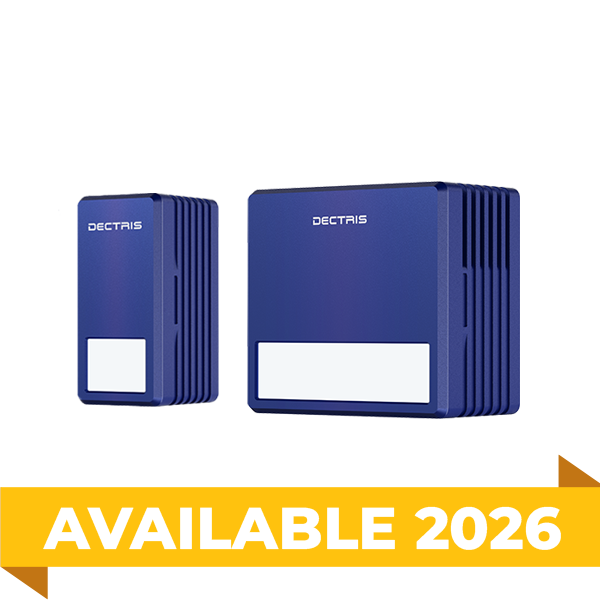
At Proto, we always choose the best possible x-ray detection systems for our equipment, which is why all of our powder diffractometers are equipped with photon-counting detectors. These detectors directly capture x-ray photons and convert them into an electrical signal. This direct conversion is advantageous because it yields zero dark noise, zero readout noise, high dynamic range, and excellent signal to noise. Choose from the SPD advanced point detector with true energy discrimination, the DECTRIS MYTHEN2 linear detector for high-speed powder diffraction, the DECTRIS EIGER2 detector for 2D powder diffraction, or the DECTRIS POLLUX detector for versatile 2D powder diffraction applications.
PROTO® SPD SILICON POINT DETECTOR
Highest quality data

DECTRIS® MYTHEN2 R 1D / 1K
High-speed strip detector (1D) / Extra wide strip detector (1K)

DECTRIS® EIGER2 R 250K / 500K / 1M
Large area detection
DECTRIS® POLLUX / POLLUX PANORAMA
Optimal energy resolution with ideal active area for powder diffraction. Dual-threshold capabilities for ultimate signal to noise.